The Haywain
John Constable, 1821
Overview
About This Work
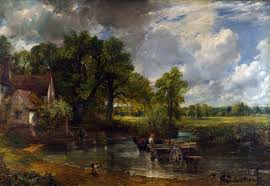
Originally titled Landscape: Noon, The Hay Wain (1821) stands as one of the most celebrated and beloved paintings in British art history. It depicts a rural scene on the River Stour, which forms the border between Suffolk and Essex, near Flatford Mill—the very landscape of Constable's childhood. At approximately 130.2 x 185.4 cm (oil on canvas), it was exhibited at the Royal Academy in 1823 and acquired by the National Gallery in 1886. The painting captures a wagon (haywain) pulled by three horses crossing the river, with Willy Lott's Cottage visible on the left bank. Crucially, The Hay Wain is one of a series of large "six-footer" canvases (so called because of their monumental scale) that Constable exhibited between 1819 and 1825, each depicting his native Suffolk with unprecedented naturalism and emotional investment. The painting was revolutionary in elevating humble, everyday agricultural labour—previously considered beneath fine art—to the scale and dignity of history painting. It profoundly influenced European landscape art, particularly French painting (it was exhibited at the Paris Salon in 1824, earning a gold medal and the admiration of French painters). Today, it is the National Gallery's most recognizable treasure and exemplifies Romantic Naturalism—a movement that celebrated nature not as Arcadian fantasy but as truthful observation.