The Anatomy Lesson of Dr Tulp
Rembrandt, 1632
Overview
About This Work
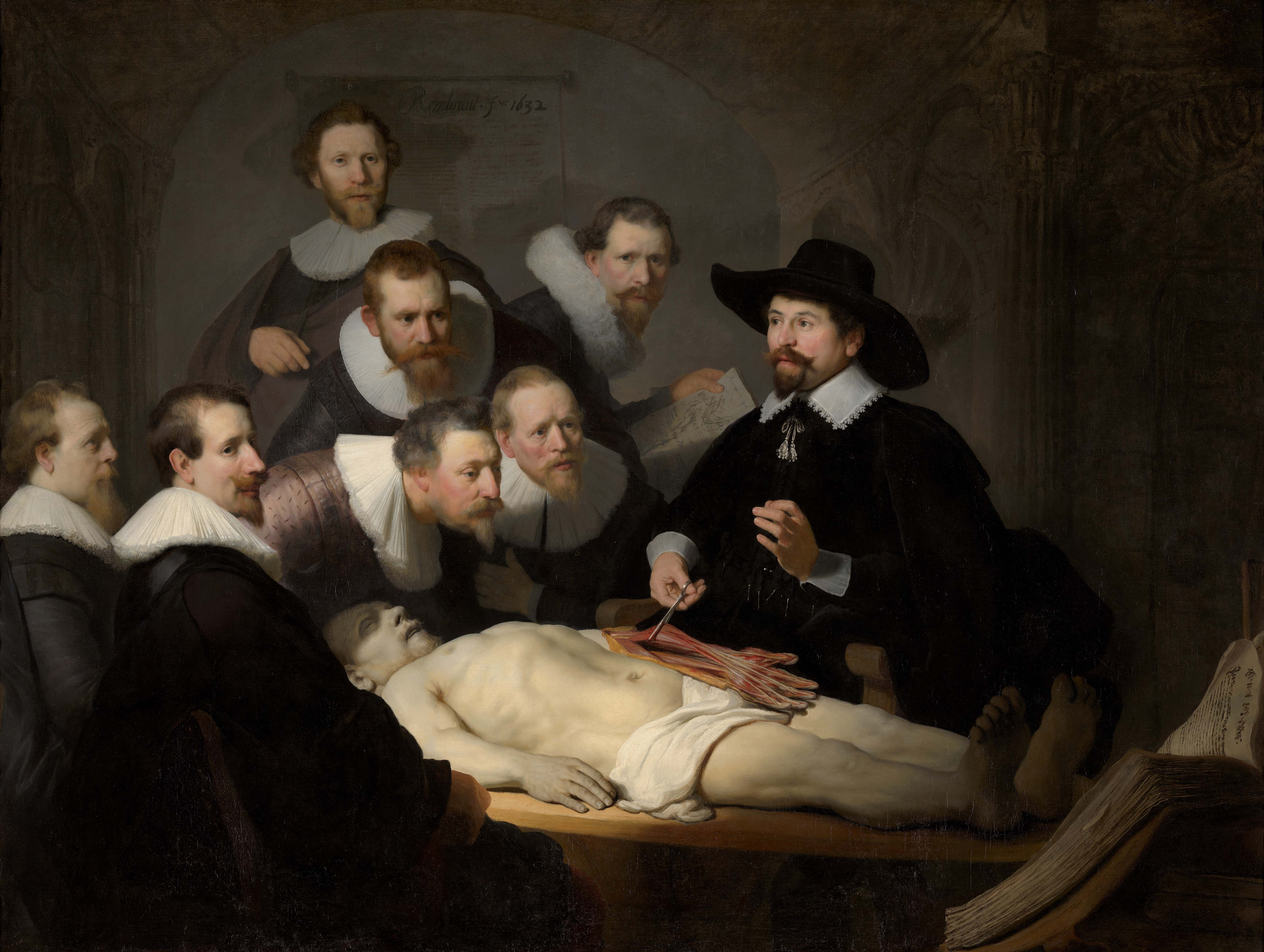
The Anatomy Lesson of Dr. Nicolaes Tulp (1632) is a masterpiece of the Dutch Golden Age by Rembrandt van Rijn (1606–1669). Painted when the artist was only 25 years old and newly arrived in Amsterdam, this large oil on canvas (169.5 cm × 216.5 cm) is housed in the Mauritshuis in The Hague. The painting is a group portrait commissioned by the Amsterdam Guild of Surgeons to commemorate their annual public dissection. It depicts the renowned physician Dr. Nicolaes Tulp demonstrating the musculature of the arm to seven guild members. The corpse is that of Aris Kindt (Adriaan Adriaanszoon), a criminal executed for armed robbery earlier that same day (January 31, 1632). Rembrandt revolutionized the genre of the corporate group portrait with this work. Traditionally, such portraits were static rows of heads (comparable to a class photo). Rembrandt, however, transformed the commission into a dramatic narrative scene, unifying the figures through shared action and psychological intensity. It stands as a testament to the 17th-century fascination with science, the fragility of the human body, and the rising status of the medical profession.