History o' Phoeart
  • Home

Nature

  • Overview
  • Landscape or Seascape in 2D
  • Animals in 2D or 3D
  • The Elements (Fire, Water, Wind or Earth) in 2D or 3D
  • The Relationship between Man/Woman and Nature in 2D or 3D

Identity

  • Overview
  • The Divine in 2D or 3D Works
  • Portraits in 2D Works
  • Portraits in 3D Works
  • Gender Identity in 2D or 3D Works

Renaissance

  • Overview
  • Religious Painting
  • Religious Sculpture
  • Mythological in 2D or 3D
  • Portraits in 2D or 3D

Baroque

  • Overview
  • Religious Painting
  • Religious Sculpture
  • Mythological Painting
  • Mythological Sculpture

About

A comprehensive study resource for Pearson Edexcel History of Art A-Level.

NatureIdentityRenaissanceBaroque

History o' Phoeart - A-Level Study Resource

Pearson Edexcel Specification • Use ⌘K to search

  1. Home
  2. Paper 1
  3. Nature
  4. Plants in 2D or 3D
  5. Sunflower Seeds
Paper 1Nature
Nature
Landscape or Seascape in 2D
Animals in 2D or 3D
The Elements (Fire, Water, Wind or Earth) in 2D or 3D
The Relationship between Man/Woman and Nature in 2D or 3D
Plants in 2D or 3D
Pre-1850
Post-1850
Non-Western
Sunflower Seeds

Sunflower Seeds

Ai Weiwei

Architecture

6 scopes • 24 artworks

Sunflower Seeds

Ai Weiwei, 2010
NatureNon-Western
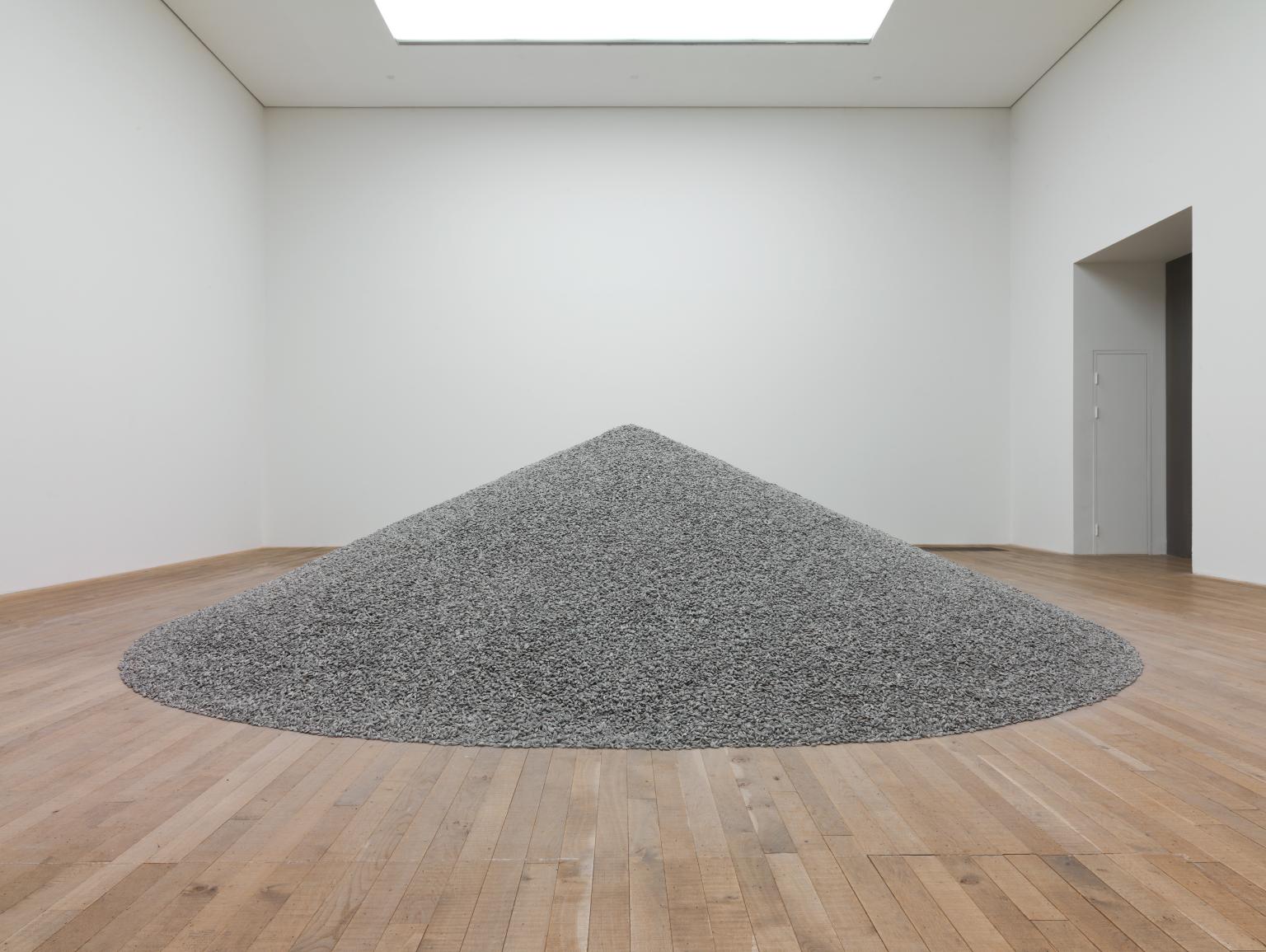
Sunflower Seeds by Ai Weiwei
Ai Weiwei, Sunflower Seeds, 2010. Porcelain, dimensions variable. Tate Modern, London.

Overview

About This Work

Sunflower Seeds (Kui Hua Zi, 2010) is a monumental contemporary art installation by Chinese artist and activist Ai Weiwei, one of the most politically significant artworks of the 21st century. First exhibited at Tate Modern, London (October 2010–May 2011) in the iconic Turbine Hall, the work comprises 100 million individually hand-crafted porcelain sunflower seeds covering approximately 1,000 square metres to a depth of 10 centimetres, totalling over 150 tonnes. Each seed was meticulously hand-modelled, hand-painted with black slip (liquid clay), and kiln-fired by more than 1,600 skilled artisans working in Jingdezhen, China's historic "Porcelain Capital," over a period of two and a half years. From a distance, the installation appears as a unified grey floor; upon close examination, each seed reveals individual variation and hand-crafted particularity. The work operates simultaneously as a meditation on individuality vs. collectivity, a critique of Chinese authoritarianism, a commentary on mass production and global labour, and a homage to Ai's childhood experiences of poverty during the Cultural Revolution. The work achieved additional notoriety when Ai was arrested at Beijing Capital International Airport on April 3, 2011—during the Tate exhibition—and detained for 81 days without charges. This political imprisonment transformed the artwork from aesthetic object to symbol of artistic freedom and resistance to censorship.

Visual Analysis

Composition

The Vast Field: The installation transforms the viewer's relationship to scale and space. From a distance, the million seeds appear as a unified, flat grey-brown field—an apparently monolithic, uniform surface. This unified appearance suggests conformity, uniformity, and the erasure of individuality within the collective mass. The Individual Within the Mass: Upon approaching and examining the work closely, each seed reveals itself as unique—slightly different in size, shape, hand-painted markings, and subtle surface variations. Each is recognizably distinct, yet lost within the overwhelming vastness. This creates a cognitive dissonance: what appears unified from afar reveals multiplicity upon inspection. Spatial Immersion: Unlike traditional art that viewers observe from a distance, Sunflower Seeds (in its original Tate installation) invited visitors to walk across, stand upon, and physically engage with the seeds. This immersive, phenomenological experience transforms the artwork from visual object to embodied spatial encounter. Visitors became part of the installation, physically implicated in the work. The Repetitive Grid: The seeds are arranged in roughly uniform rows, creating an ordered, gridded composition. This grid recalls Minimalist art (Carl Andre, Donald Judd) and suggests the rationality and order imposed by totalitarian systems, yet the grid is imperfect and hand-crafted, preventing complete mechanization. Negative Space: The work deliberately occupies the negative space of the Turbine Hall itself, transforming an empty architectural void into a dense, occupied material presence. The architecture becomes a container for the human-scale work.

Colour & Light

Monochromatic Palette: The seeds are rendered in a restricted palette of grey, cream, brown, and black—the natural colours of porcelain and hand-painted slip. This monochromatic restraint creates visual unity while emphasizing the work's labour-intensive, artisanal production rather than decorative appeal. Porcelain as Material: The choice of porcelain is loaded with historical, economic, and cultural significance. Porcelain is China's most famous traditional export, associated with imperial power and luxury. By using porcelain for cheap, disposable sunflower seeds (typically consumed as snacks), Ai subverts the material's historical prestige. The work comments on how precious materials and skilled labour have been devalued in contemporary mass production. Glazeless Surface (Slip, Not Glaze): Ai specified that the seeds be painted with slip (liquid clay) without glaze, an unusual technical choice. Unglazed porcelain is more porous, more fragile, and more labour-intensive than glazed ceramics. This technical choice emphasizes the human labour and craftsmanship invested in each seemingly ordinary seed. Luminosity and Texture: Under gallery lighting, the unglazed porcelain surfaces exhibit subtle variation in tonality and reflection. The surfaces are matte rather than glossy, suggesting modesty and understated beauty—a refusal of spectacular, seductive visual pleasure.

Materials & Technique

Hand-Craftsmanship vs. Mass Production: Each seed was individually hand-modelled (30 steps per seed), hand-painted (3-4 strokes of slip per seed), and kiln-fired. This labour-intensive process took two and a half years for 1,600 artisans. Yet the result appears to be mass-produced, industrial, cheap. This paradox—pristine craftsmanship producing the appearance of cheap mass production—lies at the work's core. Industrial-Scale Handicraft: The installation represents the intersection of artisanal tradition (Jingdezhen's 1,000+ year porcelain heritage) and contemporary global mass manufacturing. It illuminates the hidden labour behind "Made in China" products, revealing that even seemingly mass-produced commodities often involve human craftsmanship and suffering. The 30-Step Process: Each seed involved a complex 30-step production process: clay extraction, kneading, hand-moulding, trimming, drying, first firing, hand-painting with slip, washing, second firing, quality control, sorting, and packaging. This meticulous process transforms the act of making into a form of meditation, ritual, and labour activism. Documentation as Artwork: Ai documented the production process in photographs, video, and interviews. This documentation is integral to the work's meaning; the invisible labour is made visible through documentation, asserting the dignity and significance of workers typically rendered invisible in global capitalism.

Historical Context

Context

Mao Zedong and Communist Propaganda: During Ai's childhood (the Cultural Revolution, 1966–1976), Communist propaganda depicted Mao Zedong as the sun and the Chinese people as sunflowers turning toward him. Sunflower seeds were common snacks, affordable even to poor families during times of hardship. Ai's installation reclaims sunflower seeds from this propagandistic imagery, reasserting them as symbols of popular resistance and human dignity rather than state control. The Cultural Revolution and Personal Exile: Ai's father (the renowned poet and diplomat Ai Qing) was branded an "enemy of the people" during the Cultural Revolution. The family was exiled to a rural labour camp in Xinjiang for a decade, living in extreme poverty. Sunflower seeds represent this period of hardship and collective survival. Ai has said: "In the times I grew up, sunflower seeds were a symbol of hardship and also of hope." Ai Weiwei as Political Dissident: By 2010, Ai was China's most internationally visible dissident artist, celebrated in the West for his activism against censorship and authoritarianism. His earlier work Remembering (2005) listed the names of 5,196 schoolchildren killed in the 2008 Sichuan earthquake due to shoddy school construction—a critique of government negligence and corruption. Sunflower Seeds represented a continuation of this activist practice. The Arrest and Censorship: On April 3, 2011, Ai was detained at Beijing Capital International Airport and held incommunicado for 81 days. Officially charged with tax evasion, Ai asserts his true crime was political dissidence. His passport was confiscated for four years; his internet access was restricted. The arrest transformed the artwork from an aesthetic statement into a symbol of artistic freedom under threat. Global Art Market and Geopolitics: The work cost approximately £3.25 million to produce—making it possibly the most expensive artwork ever created. Yet it occupied a public institutional space (not a private collection) and explicitly critiqued consumerism and mass production. This paradox—radical political artwork as expensive commodity—reflects tensions within contemporary art between critique and complicity with the art market.

Key Themes

Connection to Nature and Identities (Individuality, Collectivity, Political Freedom)

The Individual and the Collective: The work visualizes the tension between individual identity and collective conformity. Each seed represents a person; together, the 100 million seeds represent the 1.3+ billion people of China. Yet each person is simultaneously unique and lost within the overwhelming mass—a metaphor for the individual's vulnerability within authoritarian systems. Freedom and Conformity: The sunflower, in Mao-era propaganda, symbolized blind obedience (following the sun/leader). Ai inverts this: the sunflower seed symbolizes the potential for resistance. When individuals recognize their collective power, they can "turn around" and resist authoritarianism. Ai states: "The crowd will have its way, eventually." Labour and Dignity: The work asserts the dignity and visibility of labour typically rendered invisible. The 1,600 artisans who created the seeds are celebrated; their names are recorded. This contrasts with global capitalist systems that render workers anonymous and exploitable. Nature and Mass Production: The work blurs the boundary between natural form (sunflower seeds) and industrial production (mass manufacturing). It suggests that all contemporary objects are entangled in complex global systems of labour and trade.

Exam Focus Points

Critical Perspectives

Political Art and Institutional Critique: Sunflower Seeds operates at the intersection of art world institutions (Tate Modern, the global art market) and political activism (challenging Chinese authoritarianism). Some critics argue this creates productive tension; others suggest the institutional art world co-opts political critique, rendering it safe for bourgeois consumption. The arrested artist becomes a celebrity; the political artwork becomes a collectible commodity. The Inaccessibility of the Original Experience: At Tate, visitors were later forbidden from walking on the seeds (due to health and safety concerns). This institutional restriction paradoxically silences the work—it prevents the "participatory democracy" the artwork was intended to enact. Visitors became passive viewers rather than active participants. This reflects how institutions can neutralize radical art through regulation. Mass Production and Hand-Craft: The work challenges binaries between artisanal craft and industrial mass production. Contemporary global capitalism has revealed these to be inseparable; artisanal labour often supports mass production, and mass production increasingly incorporates artisanal elements. Ai exposes this paradox through labour-intensive production of seemingly mass-produced objects. Comparison to Van Gogh's Sunflowers: Both Van Gogh's Sunflowers and Ai's Sunflower Seeds use sunflowers as primary subjects, yet their approaches are radically different. Van Gogh emphasizes emotional subjectivity and colour; Ai emphasizes collective production and political meaning. Van Gogh's sunflower is a symbol of individual genius; Ai's sunflower seeds are symbols of collective labour and resistance. This comparison illuminates how artistic meaning is historically specific and politically contingent. Documentation and the Photographic Image: The artwork exists in multiple forms: (1) the original installation at Tate; (2) photographs and video documentation; (3) smaller exhibitions with different configurations; (4) descriptions and text. The photographic image of Sunflower Seeds has become iconic and widely reproduced, yet the photograph cannot convey the immersive, phenomenological experience of walking across the actual seeds. This raises questions about how political artworks are mediated through mass media and whether reproduction domesticates their radical potential. Gender and Labour: The work documents thousands of artisans, yet research reveals that women constitute a significant portion of the workforce. Gendered labour—often rendered invisible—is implicitly present in the installation. A critical response might interrogate how gender shapes the experience of precarious, repetitive labour in contemporary China. Environmental Concerns: The production of 100 million porcelain objects raised environmental questions about resource extraction (kaolin clay), energy consumption (kiln-firing), and transportation (150 tonnes of seeds shipped globally). Some environmental critics questioned whether a critique of capitalist consumption could justify such resource-intensive production.

On this page

OverviewVisual AnalysisHistorical ContextKey ThemesExam Focus Points