Wanderer above the Mists
Caspar David Friedrich, 1817
Overview
About This Work
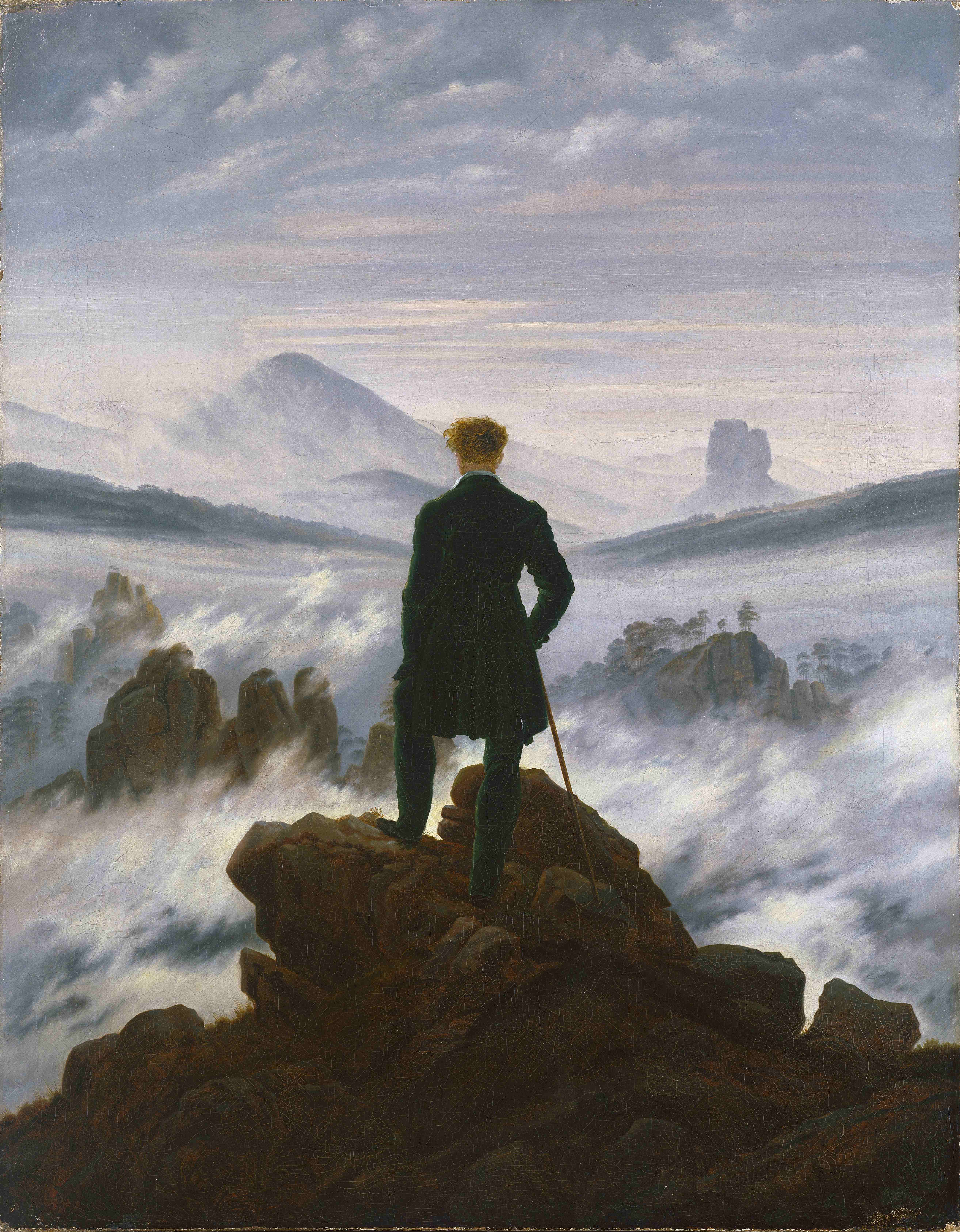
Wanderer above the Mists (Der Wanderer über dem Nebelmeer, c. 1817–1818) is the quintessential masterpiece of German Romanticism and arguably the most famous landscape painting of the 19th century. Measuring 94.8 x 74.8 cm (oil on canvas), it is housed in the Hamburger Kunsthalle in Hamburg. The painting depicts a lone man standing on a rocky precipice, his back to the viewer, gazing out over a vast landscape of jagged peaks emerging from a thick sea of fog. The work has become the definitive visual icon of the Romantic Sublime—capturing the individual's solitary contemplation of nature's vastness, mystery, and power. Unlike traditional landscapes that offer a clear, panoramic view, Friedrich presents a vision of obscurity and ambiguity, where the external world is partly hidden, inviting internal reflection. It serves as a visual manifesto for the Romantic belief that the artist's role is not merely to record nature but to reflect the soul's response to it.