History o' Phoeart
  • Home

Nature

  • Overview
  • Landscape or Seascape in 2D
  • Animals in 2D or 3D
  • The Elements (Fire, Water, Wind or Earth) in 2D or 3D
  • The Relationship between Man/Woman and Nature in 2D or 3D

Identity

  • Overview
  • The Divine in 2D or 3D Works
  • Portraits in 2D Works
  • Portraits in 3D Works
  • Gender Identity in 2D or 3D Works

Renaissance

  • Overview
  • Religious Painting
  • Religious Sculpture
  • Mythological in 2D or 3D
  • Portraits in 2D or 3D

Baroque

  • Overview
  • Religious Painting
  • Religious Sculpture
  • Mythological Painting
  • Mythological Sculpture

About

A comprehensive study resource for Pearson Edexcel History of Art A-Level.

NatureIdentityRenaissanceBaroque

History o' Phoeart - A-Level Study Resource

Pearson Edexcel Specification • Use ⌘K to search

  1. Home
  2. Paper 1
  3. Identity
  4. Identity in Architectural Works
  5. St Paul's Cathedral
Paper 1Identity
Identity
The Divine in 2D or 3D Works
Portraits in 2D Works
Portraits in 3D Works
Gender Identity in 2D or 3D Works
Ethnic Identity in 2D or 3D Works
Identity in Architectural Works
Pre-1850
Temple of Heaven

Temple of Heaven

Unknown

St Paul's Cathedral

St Paul's Cathedral

Sir Christopher Wren

The Royal Observatory

The Royal Observatory

Sir Christopher Wren

Post-1850

6 scopes • 24 artworks

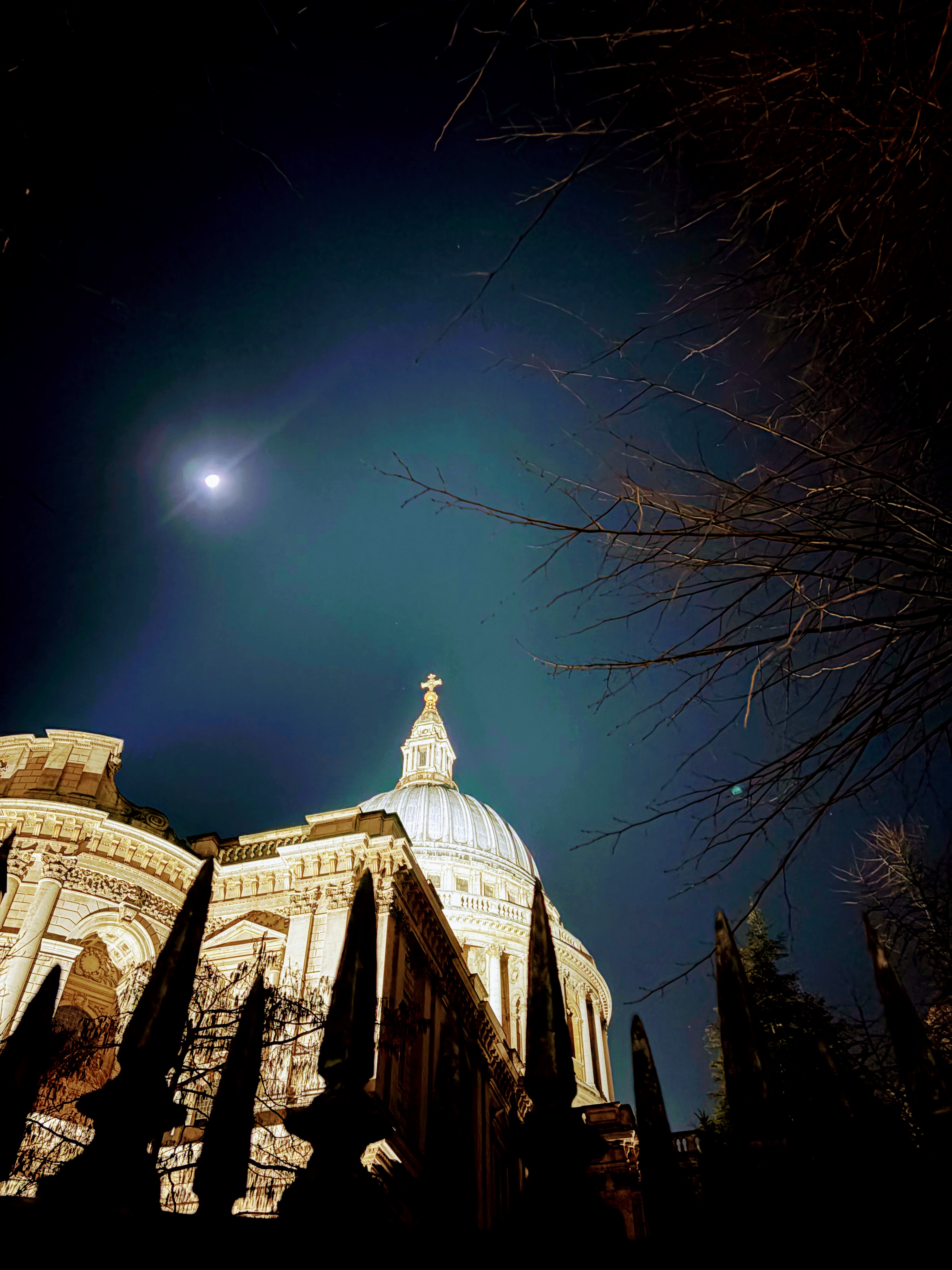
St Paul's Cathedral

Sir Christopher Wren, 1675-1710
IdentityPre-1850
St Paul's Cathedral by Sir Christopher Wren
St Paul's Cathedral, Sir Christopher Wren, 1675–1710, Portland stone, London, UK

Overview

About This Work

St Paul's Cathedral is the masterpiece of Sir Christopher Wren (1632–1723) and the iconic symbol of London's resilience. Built between 1675 and 1710, it replaced the medieval "Old St Paul's" which was destroyed in the Great Fire of London (1666). As the first cathedral ever built to completion by a single architect within his own lifetime, it represents a unified vision of the English Baroque style. Wren's design is a complex negotiation between the classical architectural language he admired (from Rome and France) and the medieval liturgical traditions required by the Anglican clergy. The result is a building that appears Classical and Baroque on the outside (with a massive dome and Corinthian orders) but functions structurally like a Gothic cathedral on the inside (with flying buttresses and a long nave). It stands as a physical manifestation of the Restoration monarchy and the established Church of England, balancing Protestant restraint with royal grandeur.

Visual Analysis

Composition

The Dome: Triple-Shell Construction - The dome is a marvel of structural engineering, composed of three distinct shells, an innovative solution to visual and structural problems. The Inner Dome is a masonry hemisphere visible from the interior, perfectly proportioned for the view from the nave floor. The Middle Cone is a hidden brick cone (invisible to the viewer) that rises from the drum to support the massive weight of the stone lantern (850 tons). The Outer Dome is a timber frame covered in lead that rests on the brick cone, providing the majestic exterior silhouette that dominates the skyline. The Peristyle: The drum of the dome is encircled by a peristyle (continuous colonnade) of 32 Corinthian columns. Every fourth intercolumniation is filled with masonry to create a "structural buttress" while maintaining the rhythm of an open colonnade. This feature was influenced by Bramante's Tempietto in Rome. The West Facade: Unlike the single giant order of St Peter's in Rome, Wren used a two-tiered portico with coupled Corinthian columns on the lower level and Composite columns above. This reflects the two-story elevation of the interior aisles and nave. The two western towers show the distinct influence of the Roman Baroque (specifically Borromini's Sant'Agnese in Agone). They feature concave and convex curves, complex geometry, and pineapples (symbols of hospitality) on top. The triangular pediment contains a relief of the Conversion of St Paul (1706) by the sculptor Francis Bird, depicting the saint being struck down on the road to Damascus. The "Sham" Walls: One of the most controversial but brilliant features is the upper story of the exterior walls. These are screen walls—they are essentially fake walls that stand solely to hide the flying buttresses behind them. Structurally, the heavy nave vault required Gothic-style flying buttresses to hold it up. However, Wren abhorred Gothic "crutches" appearing on a Classical building. The screen walls hide this engineering reality, giving the exterior the appearance of a solid, unified Classical block.

Colour & Light

Interior Space: Instead of a continuous barrel vault (typical of Roman churches), the nave ceiling consists of a series of shallow saucer domes. This creates a lighter, airier feel than heavy Roman Baroque interiors. The dome rests on eight piers (rather than the traditional four). This distributes the weight more evenly and creates distinct diagonal views into the transepts. Light: The interior was originally flooded with clear white light through clear glass (much of the stained glass is Victorian or modern), reflecting Wren's desire for a rational, intellectual, and "auditory" space where the spoken Word of God could be clearly heard, in line with Protestant theology. Decoration: The current glittering mosaics in the quire and dome are late 19th-century additions (Queen Victoria famously complained the original interior was "dull, dark and undevotional"). Wren's original interior relied on the purity of white stone and architectural geometry, with minimal carving by Grinling Gibbons (woodwork) and Jean Tijou (ironwork).

Materials & Technique

Portland Stone: The entire exterior is clad in Portland stone, a fine-grained limestone from Dorset that weathers to a warm cream color. This unified material palette gives the cathedral its distinctive pale, luminous appearance. Triple-Shell Dome Engineering: The innovative three-shell dome construction represents one of the greatest engineering achievements of its age. The hidden brick cone between the inner and outer domes allows each to be optimized for its purpose—the inner dome for visual proportions from below, the outer dome for the city skyline—while the cone carries the structural load of the 850-ton stone lantern. Lead-Covered Timber: The outer dome's timber frame covered in lead sheets was a lighter alternative to a full masonry dome, reducing the load on the supporting drum while maintaining the grand silhouette.

Historical Context

Context

The Great Fire and Rebuilding: The medieval cathedral had been decaying for decades (Inigo Jones had attempted to re-clad it in the 1630s). The Great Fire of London (1666) settled the debate between restoration and rebuilding by gutting the old structure. The fire gave Wren a tabula rasa (blank slate) to reimagine London. Although his grand plan for the city streets was rejected, St Paul's became the crown jewel of the rebuilding effort, funded by a tax on coal coming into London. The "Warrant Design" vs. Execution: Wren's favourite design was a Greek Cross plan (equal arms) with a massive dome, inspired by Michelangelo. The clergy rejected this as too "Popish" (Catholic) and impractical for Anglican processions. The "Warrant Design" (Approved 1675): Wren submitted a compromise design—a traditional Gothic-style long nave (Latin Cross) with a modest spire. King Charles II approved this but gave Wren a secret "loophole": permission to make "ornamental changes" during construction. The Deception: Wren used this loophole to completely redesign the building as he built it. He scrapped the spire for the massive dome and raised the screen walls. The final building looks almost nothing like the approved Warrant Design, a testament to Wren's political cunning.

Key Themes

Restoration, Royal Authority, and the Anglican Compromise

Resurgam: On a piece of ruined stone Wren found in the rubble, the Latin word Resurgam ("I shall rise again") was inscribed. He placed this word above the south door under a carved phoenix. The cathedral symbolizes the resurrection of the Monarchy (restored in 1660 under Charles II) after the chaos of the Civil War and the Fire. Protestantism vs. Catholicism (Baroque): St Paul's is often described as "Protestant Baroque." It adopts the grandeur of the Catholic Counter-Reformation (the dome, the scale) but tempers it with a distinct English coolness and rationalism. It avoids the emotional excess, illusionistic painting, and twisting columns of Italian Baroque. It asserts that the Church of England is just as majestic as Rome, but more "rational" and dignified. Scientific Empiricism: Before becoming an architect, Wren was a professor of astronomy and a founder of the Royal Society. His approach to the cathedral was mathematical and empirical. The triple dome is a scientific solution to an aesthetic problem; the acoustic properties of the "Whispering Gallery" reflect his interest in physics. The building is a monument to the Enlightenment mind.

Exam Focus Points

Critical Perspectives

Gothic in Classical Dress: The most common exam analysis is interpreting St Paul's as a "Gothic cathedral dressed in Classical clothes." Physically, it has the floor plan of a medieval cathedral (long nave, choir, transepts, aisles) and the structural support (flying buttresses). Visually, it uses the language of Rome (domes, columns, pediments). The Screen Walls: Be prepared to discuss whether the screen walls are an "architectural lie" (dishonest construction) or a "brilliant aesthetic solution" (unifying the exterior). Comparison to St Peter's: Compare Wren's dome to Michelangelo's. Wren's is taller and more vertical (to suit the London skyline); Michelangelo's is wider and flatter. Wren's lantern is stone (heavy); Michelangelo's is lighter. Influence: Discuss how the Western towers influenced generations of British church architecture (the "Baroque steeple") and how the dome became a symbol of national survival during the Blitz of WWII.

On this page

OverviewVisual AnalysisHistorical ContextKey ThemesExam Focus Points