Judith Slaying Holofernes
Artemisia Gentileschi, 1611-1612
Overview
About This Work
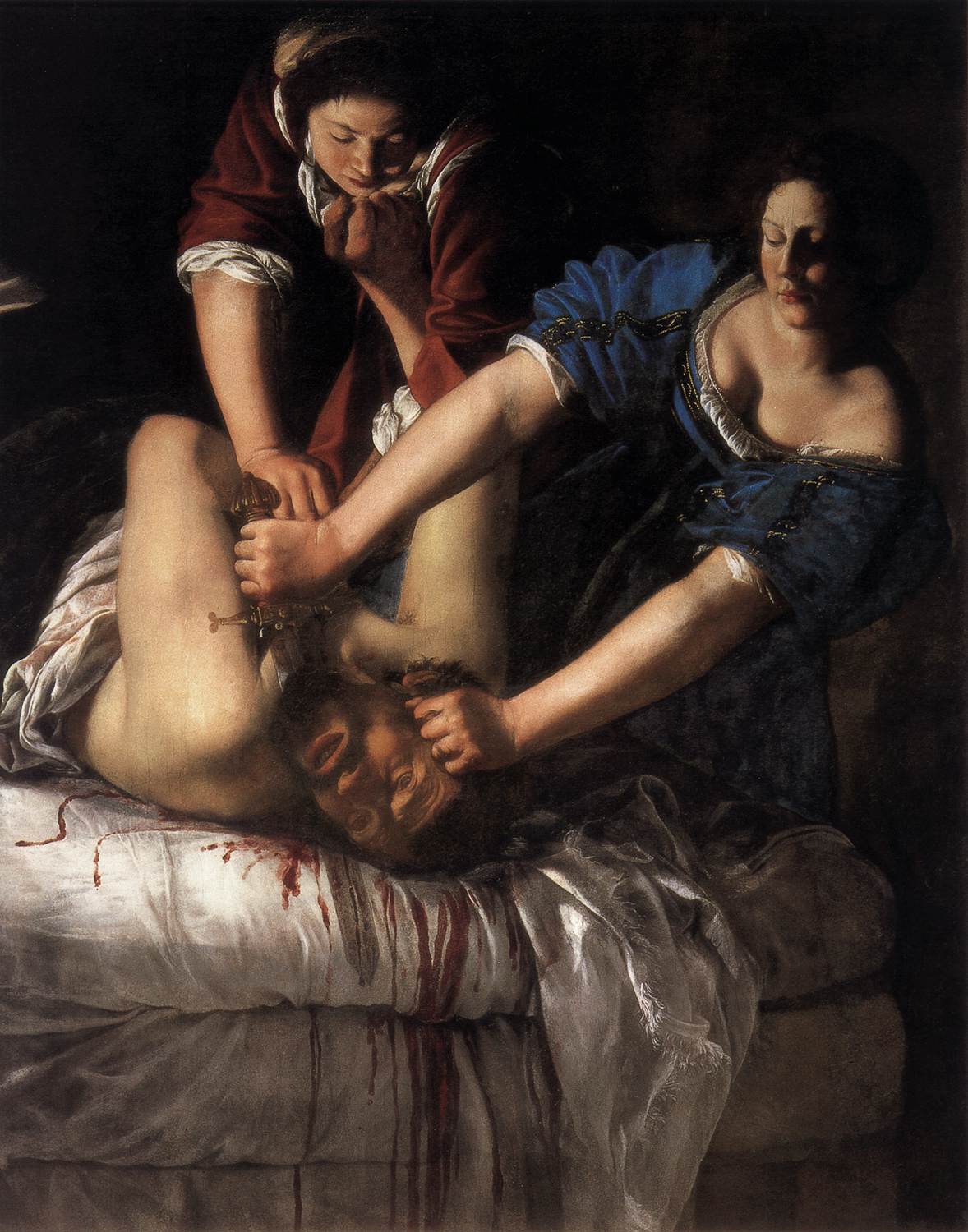
Judith Slaying Holofernes (c. 1612–1613) is the most famous and potent masterpiece by the Italian Baroque painter Artemisia Gentileschi (1593–c.1656). Housed in the Museo Nazionale di Capodimonte in Naples (with a later, slightly larger version in the Uffizi, Florence, c. 1620), the painting depicts the climax of the biblical Book of Judith: the Jewish widow Judith and her maidservant Abra beheading the drunken Assyrian general Holofernes to save their city of Bethulia. Artemisia's interpretation is celebrated for its unflinching violence, visceral realism, and physical power, distinguishing it from nearly all other depictions of the subject by male artists (including Caravaggio). Painted when Artemisia was approximately 19 years old—shortly after she was raped by the painter Agostino Tassi and endured a humiliating public trial—the work is frequently interpreted through a biographical lens as a visual act of revenge or catharsis. However, it also stands as a supreme example of Caravaggisti painting, demonstrating Artemisia's mastery of light, anatomy, and dramatic narrative.