The Garden of Opportunity
Evelyn De Morgan, 1892
Overview
About This Work
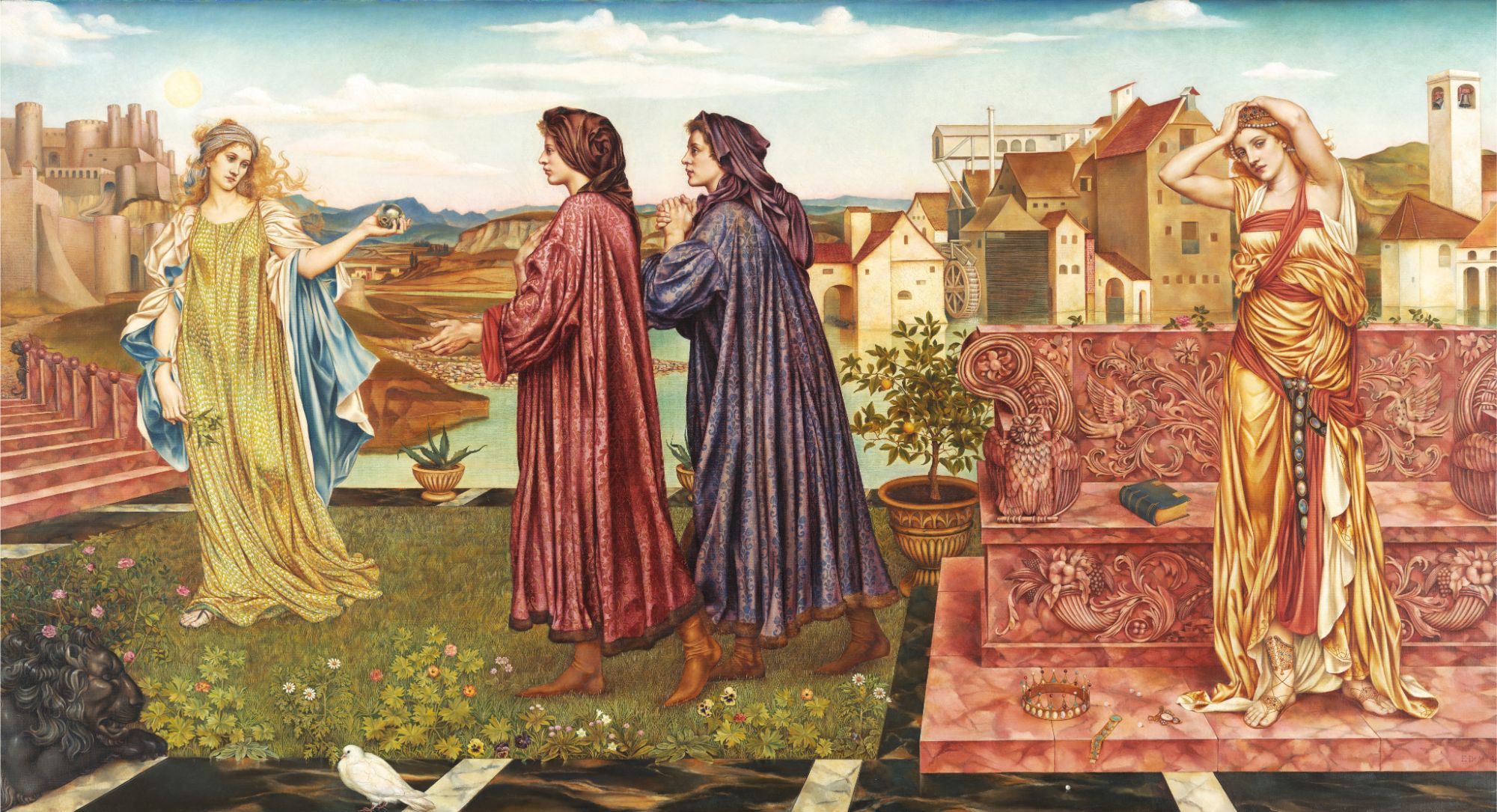
The Garden of Opportunity (1892) is a monumental allegorical painting by Evelyn De Morgan (1855–1919), one of the last and greatest painters of the Pre-Raphaelite Movement. Measuring 179 x 122 cm (oil on canvas), the work depicts two male students at a moral and existential crossroads in a fantastical garden landscape. They must choose between the path of Wisdom (represented by an austere, knowledge-bearing female figure on the right) and the path of Folly (represented by a seductive figure on the left offering worldly pleasures). The painting is a visual morality play, packed with Renaissance-inspired symbolism and deeply infused with De Morgan's spiritual and feminist convictions. Created while the artist was living in Florence, the work was not exhibited during her lifetime, yet it stands as one of her most sophisticated and psychologically rich explorations of choice, consequence, and the human soul. The painting exemplifies the later Pre-Raphaelite style: meticulous detail, jewel-like colour, spiritualist themes, and a profound commitment to using allegory as a vehicle for moral and social critique.