The Supper at Emmaus
Caravaggio, 1601
Overview
About This Work
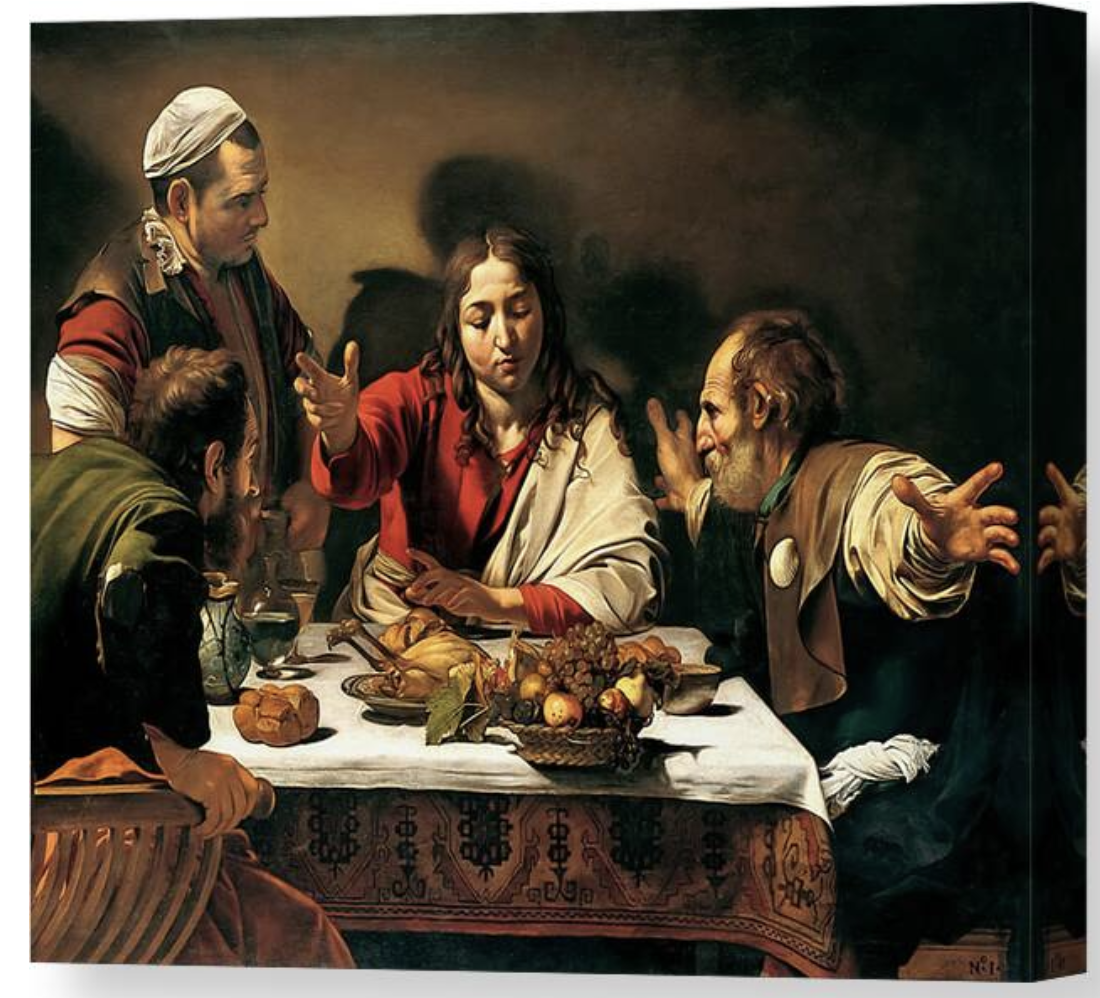
The Supper at Emmaus (1601) is Caravaggio's most theatrically dynamic treatment of a New Testament subject and one of the supreme achievements of Baroque religious painting. Commissioned by Ciriaco Mattei—brother of Cardinal Girolamo Mattei, in whose palazzo Caravaggio had taken up residence in 1601 after leaving Cardinal del Monte's household—it depicts the post-Resurrection episode from Luke 24:13-35, in which two disciples travelling to Emmaus encounter a stranger who walks with them, whom they invite to dine, and whom they recognise as the risen Christ at the moment he blesses and breaks the bread. The painting was presented to the National Gallery, London by the Hon. George Vernon in 1839, where it remains in Room 32 (NG172). Caravaggio also painted a second, later version of the same subject in 1606 (now in the Pinacoteca di Brera, Milan)—a markedly darker, more austere work that reflects the changed conditions of his fugitive life after the murder of Tomassoni; comparing the two versions provides important evidence of stylistic and psychological development.