The Baroque Period (c. 1600–1680)
Comprehensive Context Analysis
A rigorous study of the religious, political, technological, and artistic factors shaping the Baroque period, with detailed analysis of Caravaggio and Bernini as specified artists.
The Catholic Response to the Rise of Protestantism
The Protestant Challenge
The Reformation, launched by Martin Luther's Ninety-Five Theses (1517), constituted the most serious institutional and theological crisis in the history of the Western Church. Luther challenged not only specific abuses (the sale of indulgences, clerical corruption) but fundamental Catholic doctrines: the authority of the pope, the efficacy of the sacraments, the intercession of saints, the doctrine of purgatory, and the status of the Virgin Mary.
John Calvin (from 1536) developed a more radical theological program, emphasising predestination and rejecting virtually all forms of religious imagery as idolatry. Calvinist and Zwinglian iconoclasm — the systematic destruction of religious images in churches — struck at the heart of the visual culture that the Catholic Church had built over a millennium.
By 1600, northern Germany, the Netherlands, England, Scotland, Scandinavia, and much of Switzerland had permanently broken with Rome. The remaining Catholic territories — Italy, Spain, France (contested), the southern Netherlands, much of the Holy Roman Empire — required urgent spiritual renewal and institutional reform.
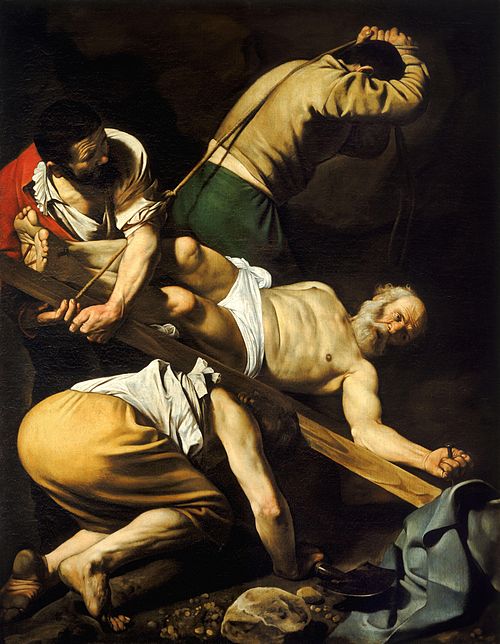
Example: Tridentine Aesthetic in Practice
Caravaggio, Martyrdom of St Peter, 1601. Cerasi Chapel, Santa Maria del Popolo, Rome.
The Council of Trent (1545–1563)
The Council of Trent — the Catholic Church's formal response to the Reformation — met intermittently between 1545 and 1563 under three successive popes and produced a comprehensive program of doctrinal definition and institutional reform. Its final session (December 1563) addressed religious images directly in its Decree on the Invocation, Veneration, and Relics of Saints and on Sacred Images.
The decree's core assertions:
The Tridentine decree created a new set of requirements for religious art. Artists were expected to produce works that were emotionally immediate and accessible, capable of moving even the illiterate to devotion; doctrinally specific, asserting precisely those doctrines contested by Protestants; and theatrically persuasive, engaging the viewer's senses as vehicles for spiritual transformation.
Caravaggio's Martyrdom of St Peter (1601) exemplifies the Tridentine aesthetic: the narrative is unambiguous; the figures are ordinary working people, not idealised classical types; the theological assertion — the Church's foundation in apostolic martyrdom — is visually unequivocal.
New Religious Orders and Art as Spiritual Propaganda
The Society of Jesus (Jesuits), founded by Ignatius Loyola and approved by Paul III in 1540, became the Counter-Reformation's most dynamic institutional force. Their use of theatre, music, and visual art as vehicles for spiritual education was systematic and theologically justified: if the senses could be engaged in service of devotion, then sensory experience was not a distraction from faith but a vehicle for it.
The Jesuit mother church in Rome — the Gesù, begun 1568 by Vignola — established the architectural model for Counter-Reformation churches: a large, single-nave interior with side chapels, a prominent pulpit, and lavish decoration asserting Catholic magnificence against Protestant austerity. Bernini's Sant'Andrea al Quirinale (1661–1670), built for the Jesuit novitiate, represents the mature expression of this program.
The Counter-Reformation's deployment of art operated simultaneously at several levels: intellectual (sophisticated theological programs comprehensible to educated audiences), emotional (Caravaggio's tenebrism and Bernini's theatrical architecture engaging the viewer's emotions directly), and social (decoration of parish churches and shrines maintaining ordinary Catholics' connection to Catholic culture).
Political Factors
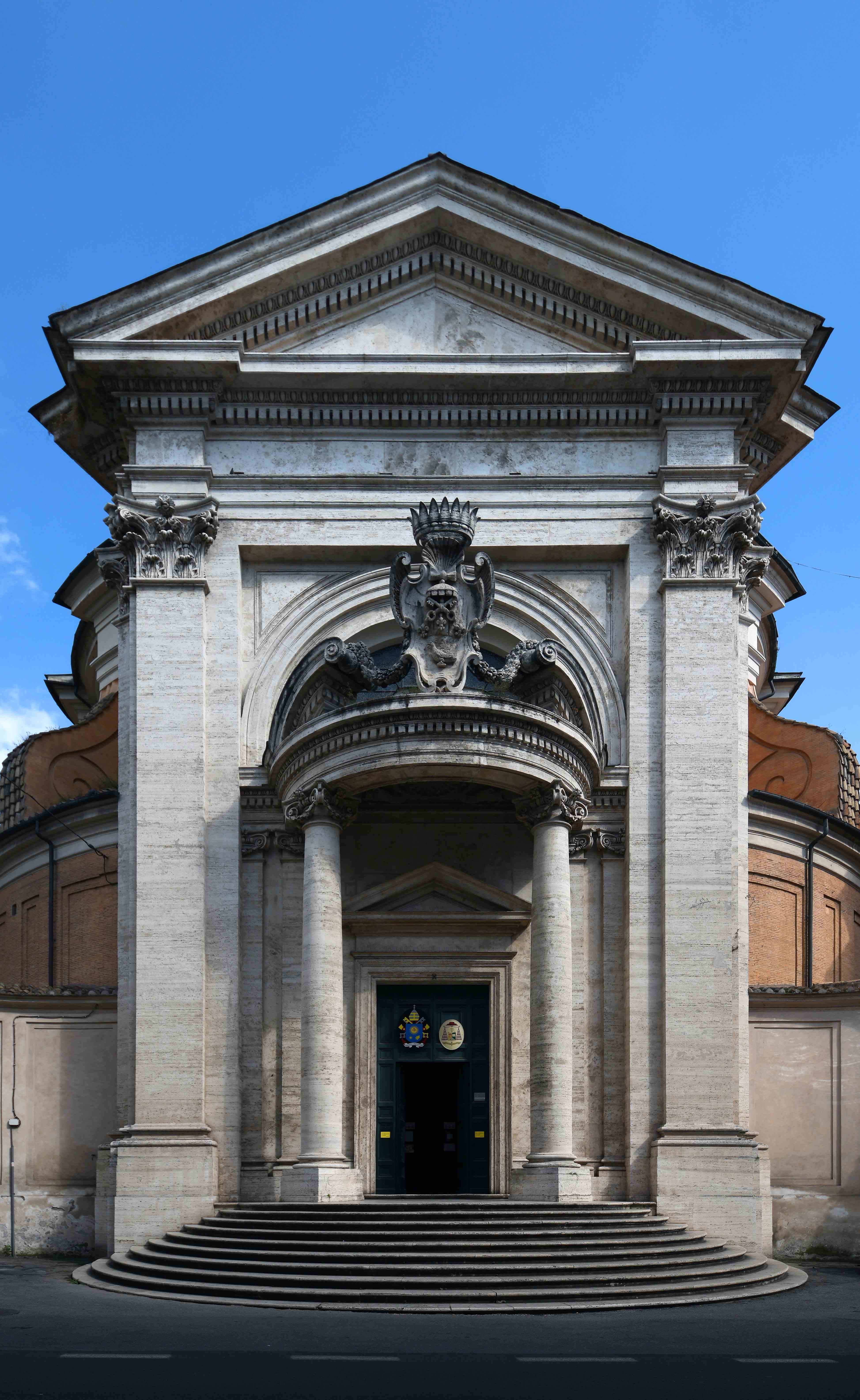
Example: Baroque Architecture and Papal Patronage
Bernini, Sant'Andrea al Quirinale (façade), 1658–1670. Rome. Commissioned for the Jesuit novitiate — a supreme realisation of the bel composto.
The Thirty Years' War (1618–1648)
The Thirty Years' War — fought primarily in the Holy Roman Empire between Protestant and Catholic powers, drawing in Spain, France, Sweden, Denmark, and the papacy — was the seventeenth century's defining political catastrophe. By its end, the war had killed an estimated eight million people and had reduced the population of some German territories by a third.
The war's consequences for artistic production varied by region. In devastated Central Europe, artistic production virtually ceased. In Rome, however, papal neutrality maintained the conditions for ambitious patronage: Bernini's most productive decades (the 1620s–1650s) coincided with the war, yet patronage in Rome continued largely uninterrupted. In the Spanish Netherlands, the presence of Spanish court patronage sustained the extraordinary Flemish Baroque of Rubens. In the Protestant Dutch Republic, the disruption of traditional Catholic patronage paradoxically accelerated the development of a new, secular market-based art economy — producing Rembrandt, Vermeer, and the Dutch Golden Age.
The Peace of Westphalia (1648) ended the war and established the principle of cuius regio, eius religio definitively, stabilising the religious map of Europe and marking the end of the Catholic Church's hope of recovering Protestant northern Europe. The post-1648 period therefore shifted the Counter-Reformation's artistic program toward a more settled, triumphalist celebration of Catholic culture.
Absolute Monarchy in France
The consolidation of absolute monarchy under Louis XIV (personal rule 1661–1715) created a distinctive French Baroque culture fundamentally different from the Roman Catholic and Spanish models. Under his chief minister Jean-Baptiste Colbert, the royal academies were deployed as instruments of cultural centralisation. The leading theorist Charles Le Brun codified the rules of expression des passions — a rationalisation of emotional expression reflecting the French court's preference for controlled, classical grandeur over Italian Baroque theatrical excess.
The Palace of Versailles — expanded by Le Vau and Hardouin-Mansart from 1661 onward — was the supreme architectural expression of absolute monarchy. Every element of the palace's design, decoration, iconography, and spatial organisation served the glorification of Louis XIV. Where Italian Baroque employed dramatic contrast and psychological intensity, French Baroque favoured geometric clarity, rational proportion, and systematic organisation — reflecting the different political contexts: sensory persuasion for the Counter-Reformation; rational order and hierarchical clarity for absolute monarchy.
The Decline of Spanish and Habsburg Power
The Spanish Habsburg Empire entered a prolonged period of military and economic decline from the mid-seventeenth century. The loss of Portugal (1640), the recognition of Dutch independence (1648), and Spain's declining silver revenues from American colonies all undermined the financial basis for the lavish patronage that had sustained the Spanish Golden Age.
The decade of greatest Spanish Baroque artistic achievement (roughly 1600–1660 — Velázquez, Zurbarán, Murillo, Ribera) coincided paradoxically with Spain's political and economic difficulties. Spanish Baroque painting reflects this tension: intense Catholic piety combines with unflinching realism and a characteristic sobriety. The Spanish tradition of lo cotidiano (the everyday) — humble, ordinary settings for religious subjects — represents a specifically Spanish resolution of the Tridentine requirement for accessible, emotionally direct religious art.
Technological Factors
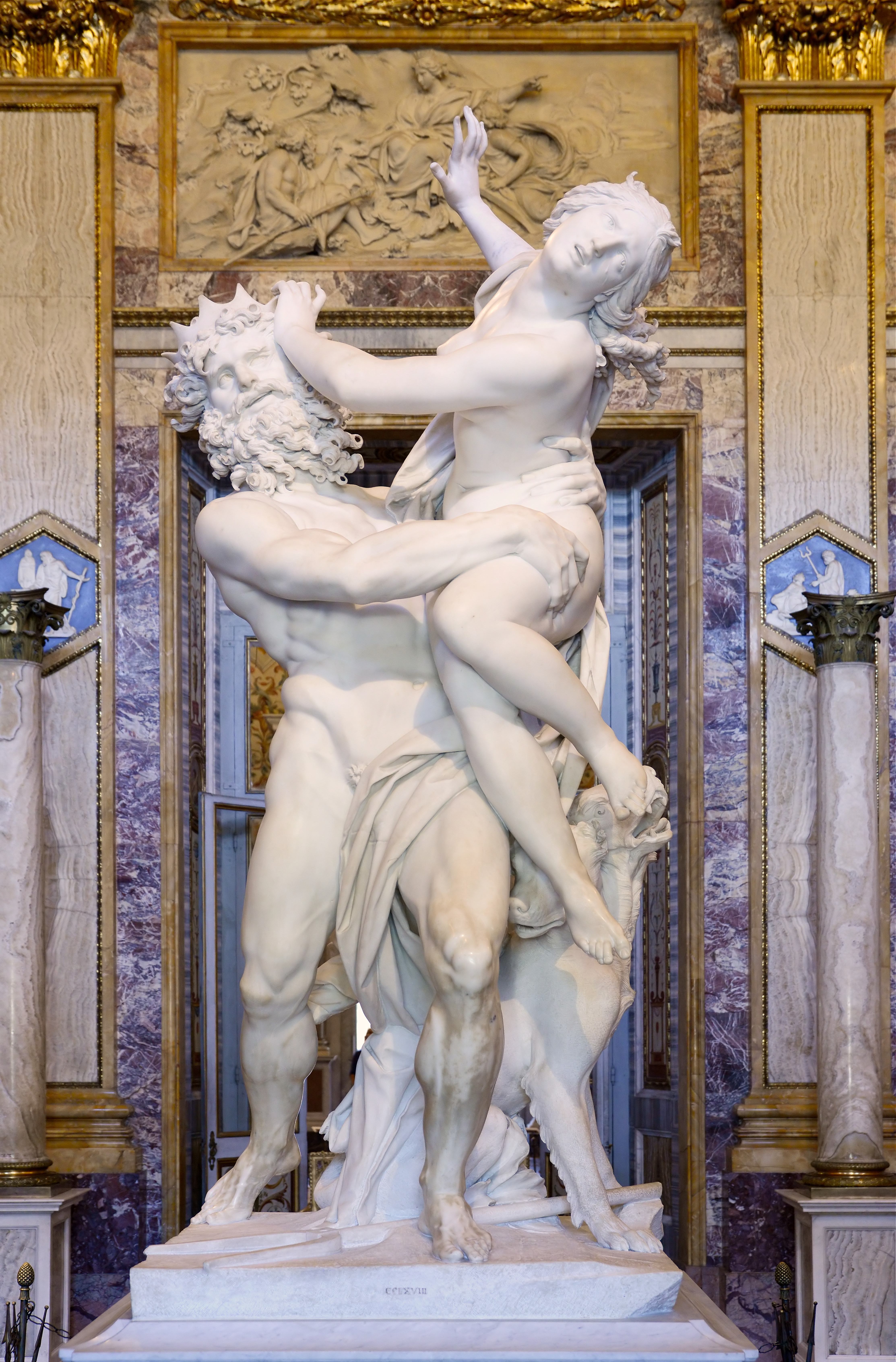
Example: Anatomical Mastery in Baroque Sculpture
Bernini, The Rape of Proserpina, 1621–1622. Carrara marble. Galleria Borghese, Rome. Pluto's fingers appear to sink into Proserpina's marble flesh — a supreme demonstration of Baroque technical mastery.
The Scientific Revolution and Its Impact on Visual Culture
The seventeenth century was the foundational era of modern science — the period of Galileo's astronomical observations (1609–1610), William Harvey's discovery of blood circulation (1628), René Descartes' mechanistic philosophy (1637; 1641), and the beginnings of the Royal Society (1660). This Scientific Revolution profoundly altered European intellectual culture in ways that both intersected with and challenged the religious visual culture of the Counter-Reformation.
The tradition of systematic anatomical investigation established by Vesalius was continued and deepened throughout the seventeenth century. For artists, anatomical study served primarily practical purposes: the ability to represent the human body convincingly remained a central requirement of ambitious figure work. Caravaggio's figures demonstrate extraordinary anatomical knowledge — the muscular straining of the executioner in Martyrdom of St Peter, the aging, wrinkled feet of common people pressed into service as saints' models. Bernini's sculptural handling of anatomy —the taut muscles of the Rape of Proserpina's Pluto, the yielding softness of Proserpina's thigh beneath his gripping fingers — demonstrates comparable mastery, deployed in service of emotional intensity.
Descartes' philosophical program — the systematic doubt of all unexamined assumptions, the distinction between the material world (governed by mechanical laws) and the immaterial mind — created an intellectual climate paralleling the Caravaggesque insistence on painting from direct observation of nature rather than from classical models. The Cartesian tradition of autopsia (direct examination of phenomena rather than reliance on authoritative texts) has direct formal analogues in Caravaggio's empirical realism.
Optics and Light
Descartes and Kepler's investigations into optics, the behaviour of lenses, and the mechanism of vision contributed to the period's intense interest in light as both a physical phenomenon and a metaphysical symbol. The camera obscura may have influenced certain Baroque painters' approach to light and spatial representation — though the extent of this influence remains debated among art historians. What is clear is that the Baroque period's defining formal achievement — the mastery of dramatic light and shadow as compositional and expressive tools — reflects a deeper cultural engagement with the behaviour of light as a phenomenon worthy of intensive investigation and representation.
Printing and the Dissemination of Baroque Visual Culture
The developed printing industry of the seventeenth century enabled the rapid circulation of Baroque visual innovations across Europe. Engravers produced prints after Caravaggio's paintings and circulated them to artists throughout Europe and the Netherlands; Rubens ran a sophisticated print business, employing engravers to produce prints after his paintings that reached collectors from London to Madrid; Bernini's architectural innovations were publicised through engraved plates. This circulation of printed images created a genuinely European artistic conversation and accelerated the spread of stylistic innovations across national and linguistic boundaries. Simon Vouet's Abduction of Europa (c. 1640–1641), for instance, was disseminated across Europe through Michel Dorigny's engraving of 1642.
Influences from Other Locations and Movements
Classical Antiquity
The ancient world continued to provide Baroque artists with formal models, iconographic programs, and philosophical frameworks, though the relationship to antiquity differed significantly from the Renaissance's systematic archaeological recovery and idealisation.
Bernini's early sculptural career was shaped by direct engagement with the ancient sculptures of the Borghese and Vatican collections. The Laocoön (rediscovered 1506) — depicting the Trojan priest and his sons struggling in the grip of sea serpents — provided a model of extreme physical and psychological anguish, of multiple intertwined figures in dynamic movement, that directly informed the Rape of Proserpina (1621–1622) and the David (1623–1624). Bernini's Pluto demonstrates the Laocoön's influence in its wide-legged stance, its twisting torso, and its expression of powerful physical effort. Classical mythology — especially Ovid's Metamorphoses — continued to provide subjects for mythological painting and sculpture.
Caravaggio's relationship to classical antiquity was deliberately provocative — he explicitly rejected classical idealisation and the Renaissance tradition of ennobling figures through classical reference. His insistence on painting sacred figures as ordinary, working-class Romans constituted a pointed departure from classical-Renaissance convention.
The Renaissance
Bernini's relationship to Michelangelo was a defining feature of his artistic identity. He studied Michelangelo's sculptures intensively — the Moses, the Pietà, the Prisoners — and understood his own sculptural project partly as the fulfillment or surpassing of Michelangelo's achievement. The Apollo and Daphne (1622–1625) engages directly with Michelangelo's Prisoners in its treatment of figures caught between material substance and spiritual transcendence, but transforms the anguished imprisonment of Michelangelo's unfinished forms into joyful metamorphic emergence.
The early Baroque period in Rome was dominated by two competing responses to the Mannerist crisis: Caravaggio's radical naturalism and the Carracci Academy's return to Renaissance classicism (particularly the synthesis of Raphael's compositional grandeur and Venetian colorism developed by Annibale Carracci). Both responses engaged critically with the Renaissance: Caravaggio by rejecting its idealism; the Carracci by recovering and systematising its achievements.
Mannerism
Mannerism — the style developed in Italy between approximately 1520 and 1600, characterised by elongated elegance, complex figura serpentinata poses, sophisticated obscurity of subject, and self-conscious aesthetic refinement — provided the immediate context from which both Caravaggio and Bernini departed. The Counter-Reformation's rejection of Mannerist obscurity (implied in the Tridentine decree) created the conditions for Caravaggio's naturalistic revolution. Where Mannerist sacred figures were elongated, other-worldly, and aesthetically remote, Caravaggio's were physically present, emotionally immediate, and recognisably human.
Flemish Influence on Italian Baroque
Rubens's two-year sojourn in Italy (1600–1608) resulted in a Flemish synthesis of Italian Baroque that subsequently influenced Italian painters. Rubens's command of Venetian colorism (directly absorbed from Titian and Veronese), Roman grandeur (from Michelangelo), and his own Northern tradition of rich material texture and dynamic figure composition created a visual vocabulary of extraordinary richness that circulated throughout Europe through prints and through the movement of his paintings to collections from Madrid to Paris to London.
Specified Artists: Influences from Two Other Artists
Caravaggio (1571–1610)
Influence 1: Simone Peterzano and the Lombard Tradition
Caravaggio trained in Milan (c. 1584–1588) in the workshop of Simone Peterzano, a painter who had himself trained with Titian in Venice and maintained a Lombard tradition combining late Renaissance naturalism with Venetian colorism. From Peterzano, Caravaggio absorbed three key qualities:
Influence 2: Annibale Carracci and the Classical Response
Annibale Carracci (1560–1609), who directed the Accademia degli Incamminati in Bologna, arrived in Rome in 1595 — the same period as Caravaggio — and represented the dominant alternative to Caravaggio's naturalism. From Carracci's example, Caravaggio absorbed (and then departed from) the model of classical compositional structure. Carracci's synthesis of Raphael, Correggio, and Titian demonstrated what could be achieved within the Renaissance inheritance; Caravaggio engaged seriously with this model before developing his more radically naturalistic alternative.
Carracci's admiration for Correggio — whose innovative, soft-edged sfumato and dramatic foreshortening provided the model for Baroque illusionism — indirectly introduced Caravaggio to experiments with directed light and its emotional effects. Caravaggio's tenebrism represents a far more extreme version of Correggio's earlier experiments with light as an emotional and spiritual vehicle.
Specific Impact on Caravaggio's Work
Peterzano's Lombard naturalism directly informed the Calling of Saint Matthew(1599–1600): the figures in the tax collector's office are specific, physically particularised Lombard types — wearing contemporary clothing rather than classical drapery. The light — raking, directional, creating extreme contrasts — extends the Lombard nocturnal tradition to a theological statement: divine light (entering through the window / Christ's gesture) penetrating earthly darkness.
The Carracci influence (and reaction against it) is visible in the Martyrdom of St Peter(1601): where the Carracci tradition would have provided idealised, classically poised figures in rhetorical poses, Caravaggio gives the viewer straining, physically ordinary labourers engaged in the brutal mechanical work of raising a cross. The rejection of classical idealisation in favour of physical specificity is deliberate and polemical.
Bernini (1598–1680)
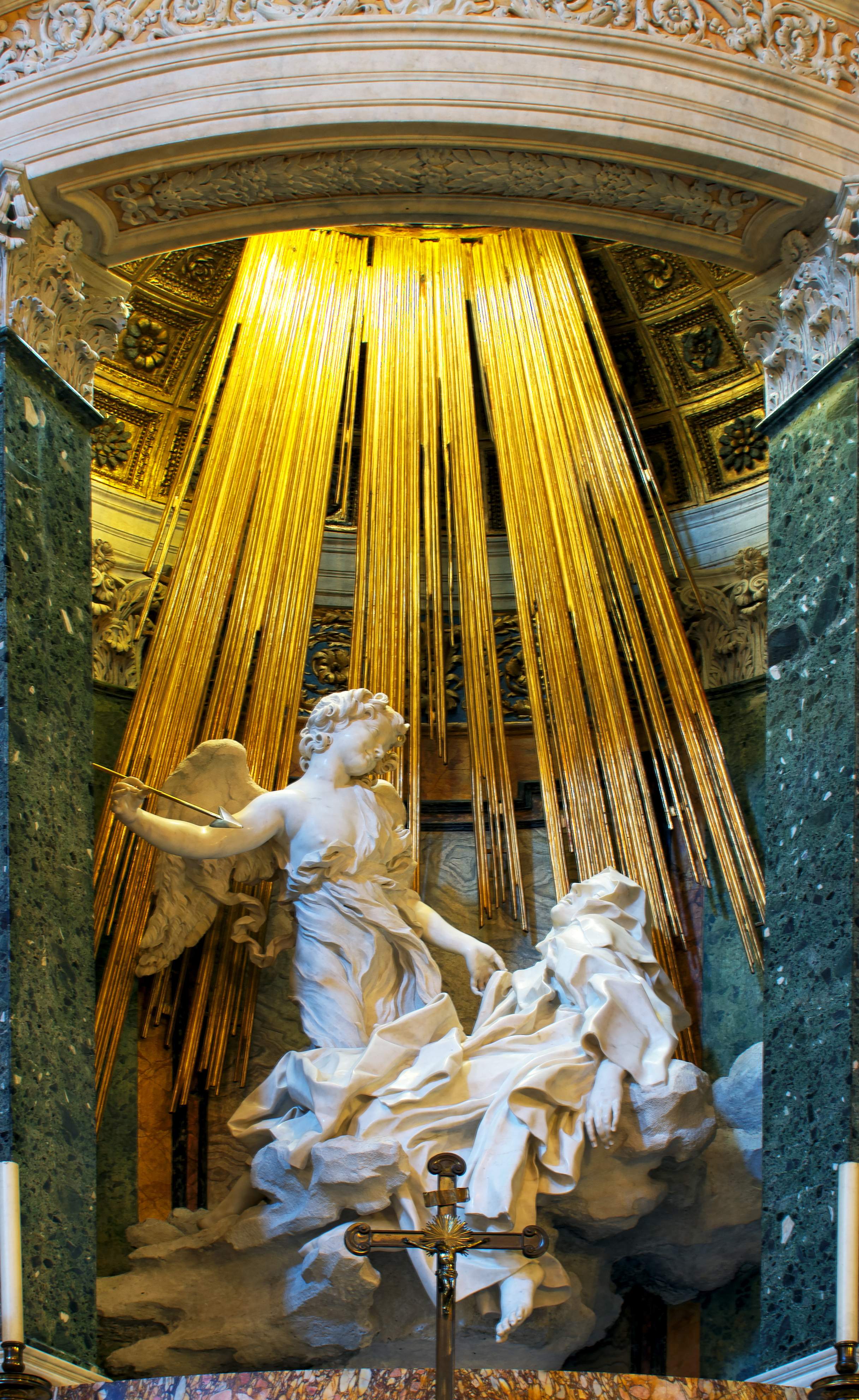
Example: Bernini's Bel Composto
Bernini, The Ecstasy of Saint Teresa, 1647–1652. Cornaro Chapel, Santa Maria della Vittoria, Rome. The supreme realisation of architecture, sculpture, painting, and light fused into a single immersive experience.
Influence 1: Michelangelo
Michelangelo's overwhelming presence in Roman artistic culture — his sculptures in St Peter's, the Capitoline Museums, and San Pietro in Vincoli; his Sistine Chapel ceiling; his architectural projects — meant that no Roman sculptor or architect of the seventeenth century could form an identity independent of engagement with his achievement. Bernini reportedly studied the Moses (San Pietro in Vincoli) for weeks; he drew and modeled after the Sistine figures; he engaged with the Pietà as the supreme model of marble carving.
Influence 2: Annibale Carracci and the Classical Baroque
Annibale Carracci's Farnese Gallery ceiling (1597–1601) — the first great monument of Roman High Baroque painting, depicting scenes from Ovid's Metamorphoses in a complex illusionistic framework — directly influenced Bernini's thinking about the integration of multiple artistic media and the deployment of classical mythology for secular palatial decoration.
Carracci's figure style — physically robust, classically informed, anatomically convincing, emotionally engaged — provided Bernini with a painterly model for sculptural figure composition. The muscular power of Carracci's mythological figures (particularly the athletic ignudiborrowed from Michelangelo's Sistine ceiling) informs the physical dynamism of Bernini's early marble groups. Carracci's synthesis of classical grandeur and emotional directness provided Bernini with a model of how to employ the Renaissance inheritance while transcending it — extending Carracci's pictorial synthesis into three dimensions and actual space.
Specific Impact on Bernini's Work
Michelangelo's influence is most directly visible in the Rape of Proserpina (1621–22): the twisting, intertwined figures engaged in extreme physical struggle recall the Laocoönfiltered through Michelangelo's Prisoners. The ability to render Pluto's stone-hard grip sinking visibly into Proserpina's soft, yielding flesh directly engages Michelangelo's Neoplatonic concept of the ideal form struggling free of its material encasing — here inverted: Proserpina's spiritual freedom is being extinguished by material force.
The Carracci influence is visible in the Apollo and Daphne (1622–25): the scene's narrative clarity, its integration of landscape elements, and its emotionally differentiated characterisation of the two protagonists (Apollo's frustrated desire, Daphne's horror-struck surprise) reflect Carracci's model of emotionally engaged, narratively clear classical mythology.